
Swastika, equilateral cross with arms bent at right angles, all in the same rotary direction, usually clockwise. It is a symbol of prosperity and good fortune and is widely distributed throughout the ancient and modern world. The word swastika is derived from the Sanskrit word ‘svastika’ which refers to ‘well-being’ and ‘good luck’.

The swastika was a favourite symbol on ancient Mesopotamian coinage. In Scandinavia, the left hand swastika was the sign for the god Thor’s hammer. It also appeared in early Christian and Byzantine art and it occurred in South and Central America (among the Maya) and in North America, principally among the Najavo. In india, the swastika continues to be the most widely used auspicious symbol of Hindus, Jains and Buddhists. Among the Jains, it is the emblem of their seventh Tirthankara and is also said to remind the worshipper by its four arms of the four possible places of rebirth – in the animal or plant world, in hell, on earth or in the spirit world.

In hinduism and jainism, the swastika is used to mark the opening pages of account books, thresholds, doors and offerings. As a kid, my mother made me mark the swastika on all my school text books and assignments, as a mark of beginning or good luck, this is something that was instilled in me as a kid, which I don’t follow much in recent times. Every time the family gets a new car or something special, it is always taken to the temple and after the offerings, the new item is marked with a swastika, to symbolise good luck. Almost every house in India has a ‘bandhanwar’, something put on all door entrances, has a swastika stitched or printed on it, again, to symbolise good luck and auspiciousness.

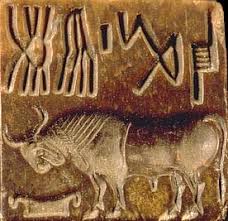
The swastika has been found in seals of the indus valley civilisation, recorded as the earliest discovery of the symbol. Historians have also trace the mention of the swastika in the vedas and the same time. According to experts, the symbol of the Swastika migrated from India –through the Tartar Mongoodi route via Kamchatka to the Americas, the reason why the symbol can be found among the Aztec and Maya civilisations.


The irony is that the swastika is more European in origin than most people realise. Archaeological finds have long demonstrated that the swastika is a very old symbol, but ancient examples are by no means limited to India. It was used by the Ancient Greeks, Celts, and Anglo-Saxons and some of the oldest examples have been found in Eastern Europe, from the Baltic to the Balkans .

If we want to see just how deeply rooted the swastika pattern is in Europe, a good place to start is Kiev where the National Museum of the History of Ukraine has an impressive range of exhibits. Among the museum’s most highly prized treasures is a small ivory figurine of a female bird. Made from the tusk of a mammoth, it was found in 1908 at the Palaeolithic settlement of Mezin near the Russian border. On the torso of the bird is engraved an intricate meander pattern of joined up swastikas. It’s the oldest identified swastika pattern in the world and has been radio carbon-dated to an astonishing 15,000 years ago. The bird was found with a number of phallic objects which supports the idea that the swastika pattern was used as a fertility symbol.

Single swastikas began to appear in the Neolithic Vinca culture across south-eastern Europe around 7,000 years ago. But it’s in the Bronze Age that they became more widespread across the whole of Europe. In the Museum’s collection there are clay pots with single swastikas encircling their upper half which date back to around 4,000 years ago. When the Nazis occupied Kiev in World War Two they were so convinced that these pots were evidence of their own Aryan ancestors that they took them back to Germany. (They were returned after the war.)
In the Museum’s Grecian collection, the swastika is visible as the architectural ornament which has come to be known as the Greek key pattern, widely used on tiles and textiles to this day. The Ancient Greeks also used single swastika motifs to decorate their pots and vases. One fragment in the collection from around 7th Century BCE shows a swastika with limbs like unfurling tendrils painted under the belly of a goat. Perhaps the most surprising exhibit in the museum is of fragile textile fragments that have survived from the 12th Century AD. They are believed to belong to the dress collar of a Slav princess, embroidered with gold crosses and swastikas to ward off evil.


The swastika remained a popular embroidery motif in Eastern Europe and Russia right up to World War Two. A Russian author called Pavel Kutenkov has identified nearly 200 variations across the region. But the hakenkreuz remains a highly charged symbol. In 1941 Kiev was the site of one of the worst Nazi mass murders of the Holocaust when nearly 34,000 Jews were rounded up and killed at the ravine of Babi Yar.
The swastika has also been spotted in ancient Korean temples, and also in the Nepalese Buddhist gompa in Kathmandu, where the curtains are shown having the swastika symbol. It is also seen on the Carlsberg brewery’s elephant tower in Copenhagen.


Capitalising on the swastika’s widespread popular usage, Adolf Hitler and the nazi party adopted the symbol in 1920. It was used on the party’s flag, badge and armband. Hitler described the swastika as a representation of the ‘mission of the struggle for the victory or the Aryan man’.Since the swastika’s use by the Nazi party in WWII, the symbol has been dropped or altered by cultures and organisations across the world. A once beautiful design, representing eternity, balance, justice, and good luck, the swastika has been tarnished by its powerful association with the suffering of war. However we believe it is important to remember its origins and recognise its use over thousands of years. We cherish uncommon objects of all kinds and urge everyone to see the beauty of a symbol that was born from a need to communicate peace and good fortune. In today’s time, the nazi symbols including the swastika flag are banned in a number of countries today, including Germany.


 Devika Singh